 VapeWholesaleHub
Box Mod Humidity Control in Coastal Warehouses — Repeat Orders
Box Mod has moved from a niche listing to a category that most vape retailers simply have to carry. That popularity brought a flood of near identical offers. This guide explains how to separate a repeatable supply chain from a lucky sample.
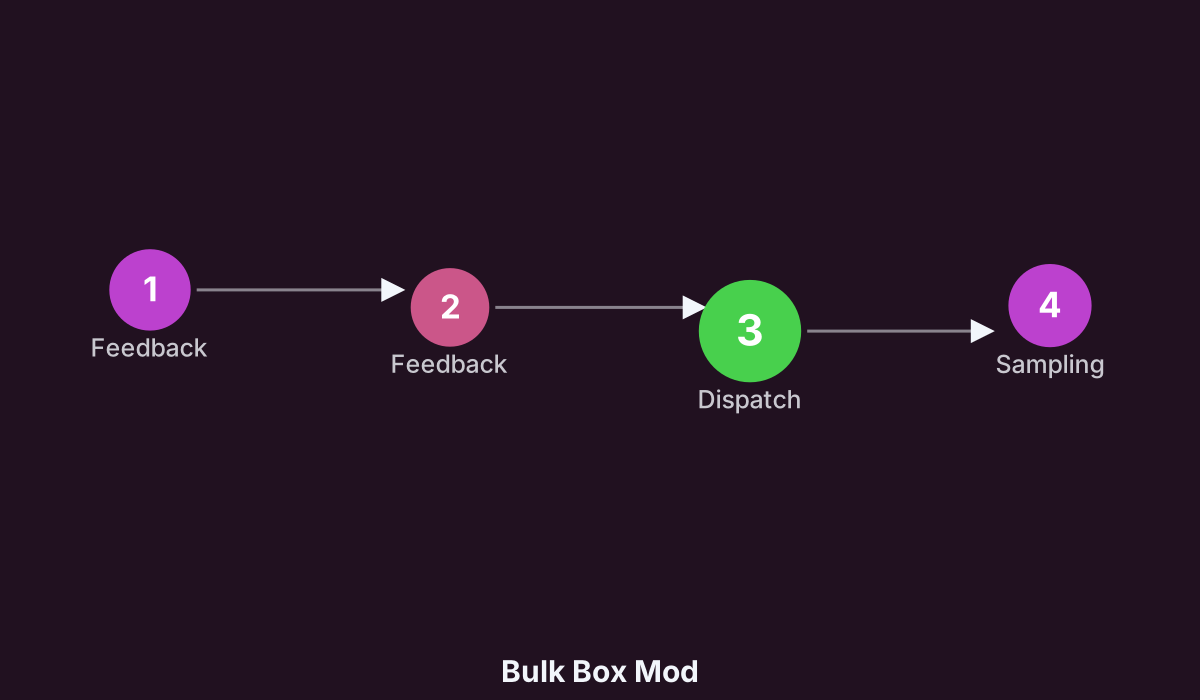
What Box Mod Really Costs Landed
Hold a small box mod buffer in your pricing model for currency movement. A few percent on a container is a real number, and it is easier to plan for than to absorb.
Discounting box mod to win shelf space tends to reset customer expectations permanently. Volume support in kind, such as display material, usually costs less in the long run.
Indicative reference points for planning purposes: entry tier from USD 1.20 per unit at 1000 units, mid tier at USD 1.53, and volume tier at USD 1.34 for full container quantities. These figures move with specification, packaging and freight, so treat them as a shape rather than a quote.
How Box Mod Batches Are Checked
The cheapest quality control step is a retained sample. Keeping three sealed units from every box mod batch costs almost nothing and turns any dispute into a simple comparison instead of an argument over photographs.
The defect rate that matters is the one your customer experiences, not the one the factory reports. Bridge that gap by inspecting the way a customer would open the box, not the way a line worker packs it.
- Confirm the current customs classification with your own broker.
- Ask how the factory measures puff count, then compare like with like.
- Agree the tolerance band in writing before approving artwork.
- Write the complaint threshold into the order terms.
- Start with a mixed carton and let your own sell-through decide.
What to Fix Before Approving Box Mod
Ask any factory for the same box mod sample twice, three months apart. If the second sample drifts, the production line is running without statistical control and your reviews will drift with it. Consistency over time is a more useful signal than a single good sample.
When we write a box mod specification with a distributor, we fix four things first: the resistance band, the liquid capacity tolerance, the puff count methodology and the packaging master carton. Everything else can flex without changing the customer experience.
| Product category | Open system |
|---|---|
| Resistance band | 1.0 - 1.2 ohm |
| Capacity tolerance | +/- 2% |
| Puff count method | Machine cycle 2s on / 18s off |
| Master carton | 300 units |
| Carton weight | 3.7 kg |
| Shelf life | 12 months |
| Storage | 15-25 C, dry, away from direct light |
Where Box Mod Sits in the Range
Category planning for box mod works best when you map it against three shopper types: the restocker who already knows what they want, the switcher who wants something stronger, and the explorer who buys on flavour name alone.
Before anything else, decide which customer you are buying box mod for. A convenience counter with limited shelf depth needs a tight range that turns quickly, while a specialist shop can carry a deeper ladder of options and educate buyers into higher ticket lines.
Getting Box Mod to Your Warehouse
Track box mod landed cost per unit as a running number, including duty and local delivery. It is the only figure that tells you whether a supplier change actually improved anything.
Trends Worth Watching
Expect box mod packaging requirements to keep tightening. Designs that leave room for additional labelling age better than tight layouts that need a full reprint to comply.
Traceability is moving from a nice-to-have to a requirement in several box mod markets. Building the habit now is cheaper than retrofitting record keeping under pressure later.
Practical Checklist
- Confirm the current customs classification with your own broker.
- Agree the tolerance band in writing before approving artwork.
- Keep sealed retained samples from every production batch.
- Start with a mixed carton and let your own sell-through decide.
- Write the complaint threshold into the order terms.
- Plan the switch from air to sea freight before you need it.
Frequently Asked Questions
What does a sample pack usually include?
A typical box mod sample pack covers the strengths or variants you are most likely to list, packed so you can evaluate them side by side. Tell us which lines you are considering and we will match the pack to that rather than sending a generic selection.
Can you match an existing product I already sell?
Often yes, provided we can measure it properly. Send a physical sample and we will report back on what can be matched, what will differ slightly, and why. An honest gap is more useful than a vague promise.
Do you provide compliance documents?
Every shipment leaves with the documentation set relevant to your market, including batch records and test reports where required. Your local rules still determine what you must file, so confirm those with your broker before import.
What information do you need to quote?
Target specification, approximate quantity, destination and any packaging requirement. With those four we can usually come back with a costed option the same working day rather than a request for more information.
How do you handle a short shipment?
Cartons are counted and weighed before dispatch and the figures are shared with you. If something is short on arrival, the packing record and the carrier documentation are both available, which keeps the claim straightforward.
Next Step
Questions that are not answered here are usually the interesting ones. Reach out with the specifics of your market and we will answer with numbers rather than adjectives.
Related Reading
- Box Mod Emissions and Leak Testing Methods — Small Batch Buyers
- Box Mod Working With a Local Compliance Partner — Three Price Tiers
- Box Mod Counterfeit Risk and Serialisation — Landed Cost Worked Through
- Box Mod Last Mile Delivery for Local Retailers — Online Sellers
- Box Mod Quality Control: Tests We Run Before Dispatch — Retail Chains
- Box Mod Transport Vibration and Pack Protection — Freight Included