 VapeWholesaleHub
Box Mod Market Demand: Reading the Numbers — Container-Scale Orders
There is a version of box mod that sells through in six weeks and a version that sits in a back room for a year. The difference is rarely obvious from a product photo. Below is the checklist our team uses when a distributor asks us to quote box mod for the first time.
Pricing and Margin
Build box mod price tiers around order sizes your customers actually place. Tiers that only make sense on a spreadsheet get ignored, and you end up discounting ad hoc instead.
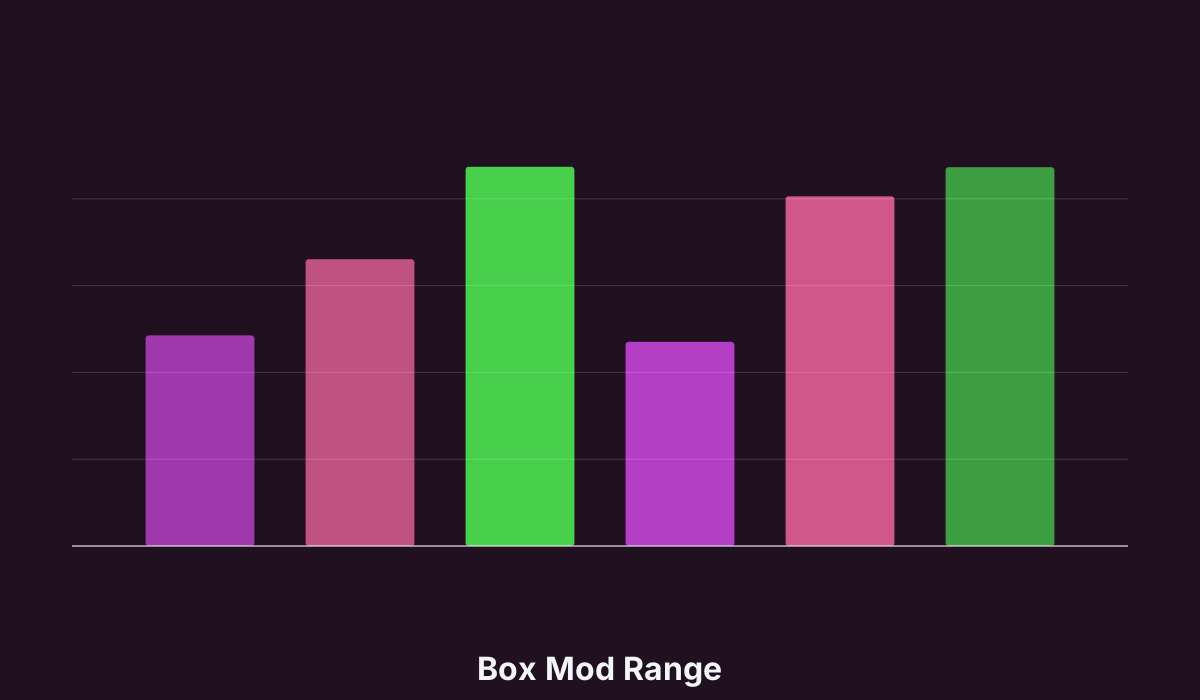
Indicative reference points for planning purposes: entry tier from USD 2.39 per unit at 1000 units, mid tier at USD 1.46, and volume tier at USD 1.31 for full container quantities. These figures move with specification, packaging and freight, so treat them as a shape rather than a quote.
How Box Mod Batches Are Checked
Train whoever receives box mod cartons to note anything unusual at the point of unloading. Damage discovered at the dock is a freight claim; damage discovered a week later is your problem.
Most defects in box mod are not dramatic. They are loose tolerances, a slightly thin seal, a mouthpiece that clicks. Left alone they turn into leak complaints, which are the single most common reason a retailer drops a line.
- Rotate stock by batch code rather than by delivery date.
- Start with a mixed carton and let your own sell-through decide.
- Ask how the factory measures puff count, then compare like with like.
- Model landed cost, not ex-works price, when comparing quotes.
- Keep sealed retained samples from every production batch.
Reading a Box Mod Spec Sheet
Ask any factory for the same box mod sample twice, three months apart. If the second sample drifts, the production line is running without statistical control and your reviews will drift with it. Consistency over time is a more useful signal than a single good sample.
Good box mod specs describe the failure boundaries, not just the target. Stating what is unacceptable gives the factory a clear production window instead of a single point they will miss half the time.
| Product category | Disposable |
|---|---|
| Resistance band | 1.2 - 1.4 ohm |
| Capacity tolerance | +/- 2% |
| Puff count method | Machine cycle 3s on / 27s off |
| Master carton | 400 units |
| Carton weight | 12.0 kg |
| Shelf life | 12 months |
| Storage | 15-25 C, dry, away from direct light |
Where Box Mod Sits in the Range
Decide early whether box mod is a traffic driver or a margin line in your store. The answer changes how you price it, where you place it and how hard you push it at the counter.
Category planning for box mod works best when you map it against three shopper types: the restocker who already knows what they want, the switcher who wants something stronger, and the explorer who buys on flavour name alone.
Freight, Customs and Timing
Split box mod shipments across two sailings when the order is large enough. It costs slightly more but removes the risk of a single event wiping out a full quarter of stock.
Plan the box mod customs paperwork at the same time as the order, not when the goods are on the water. A missing document costs more in demurrage than the entire freight saving from a cheap forwarder.
Where Demand Is Heading
Traceability is moving from a nice-to-have to a requirement in several box mod markets. Building the habit now is cheaper than retrofitting record keeping under pressure later.
Practical Checklist
- Ask how the factory measures puff count, then compare like with like.
- Plan the switch from air to sea freight before you need it.
- Start with a mixed carton and let your own sell-through decide.
- Rotate stock by batch code rather than by delivery date.
- Confirm the current customs classification with your own broker.
- Agree the tolerance band in writing before approving artwork.
Frequently Asked Questions
Is there support for in-store material?
Yes. Shelf talkers, counter cards and simple planogram suggestions are available for box mod ranges that reach a sensible volume. Most retailers find the plain strength and flavour cards do the most work.
Can I visit the production facility?
Yes, and we encourage it for larger programmes. Visits are most useful when you already have a draft specification, because you can then check the specific processes behind the numbers you care about.
Do you provide compliance documents?
Every shipment leaves with the documentation set relevant to your market, including batch records and test reports where required. Your local rules still determine what you must file, so confirm those with your broker before import.
What if I only need a small first order?
That is normal and sensible. A mixed carton lets you test box mod in your own market before committing to a production run, and the specification you approve at that stage carries through to larger orders unchanged.
Do you hold stock for regular customers?
For established programmes we can reserve production slots and, in some cases, hold finished box mod stock against a forecast. It removes most of the lead time risk from a reorder and is worth discussing once volumes are stable.
Next Step
Whether you order from us or elsewhere, keep a retained sample from every batch. It costs almost nothing and it is the single most effective protection available to a box mod buyer.
Related Reading
- Negotiating Box Mod Contracts With Overseas Factories — New Distributors
- Reducing Returns on Box Mod Through Better Specs — Wholesale Clubs
- Box Mod Slow Moving Stock and Remedial Actions — Online Sellers
- Box Mod Transport Vibration and Pack Protection — Cross-Border Trade
- Box Mod First Order Playbook for New Importers — Mixed Cabinets
- Box Mod Vendor Managed Inventory Possibilities — a Factory Floor View