 VapeWholesaleHub
Merchandising Box Mod Inside a Physical Store — North America
A box mod programme fails in predictable ways: a specification nobody wrote down, a sample nobody retained, and a lead time nobody stress tested. Here is how to close those three gaps before they cost you a container.

Inspection Before Dispatch
Most defects in box mod are not dramatic. They are loose tolerances, a slightly thin seal, a mouthpiece that clicks. Left alone they turn into leak complaints, which are the single most common reason a retailer drops a line.
- Write the complaint threshold into the order terms.
- Start with a mixed carton and let your own sell-through decide.
- Confirm the current customs classification with your own broker.
- Keep sealed retained samples from every production batch.
- Model landed cost, not ex-works price, when comparing quotes.
Turning Box Mod Into Repeats
Staff knowledge moves box mod more than any fixture. A two minute explanation of the difference between this line and the one next to it converts a browsing shopper into a repeat buyer far more reliably than a discount.
Keep the box mod range tidy. A half empty shelf reads as a dying line, and customers interpret it that way faster than any signage can correct.
Positioning Box Mod on Your Shelf
Category data for box mod is noisier than it looks. Promotions, weather and local competition all move weekly numbers, so read three months at a time rather than reacting to a single week.
A tight box mod range with deep availability usually outsells a wide range with thin stock. Customers who find their line in stock come back; customers who are told to wait do not.
Freight, Customs and Timing
Consolidating box mod with other lines is often the biggest single saving available to a mid size importer. The unit cost does not change but the landed cost does, sometimes materially.
Ask your forwarder for the box mod transit history on your lane, not the advertised schedule. The gap between the two is the buffer you should build into your reorder point.
The Specification That Matters
Ask for the box mod specification in the same units you intend to measure in. A metric quoted in a form you cannot verify on arrival is not a specification, it is a claim.
When we write a box mod specification with a distributor, we fix four things first: the resistance band, the liquid capacity tolerance, the puff count methodology and the packaging master carton. Everything else can flex without changing the customer experience.
| Product category | Pod system |
|---|---|
| Resistance band | 1.2 - 1.4 ohm |
| Capacity tolerance | +/- 3% |
| Puff count method | Machine cycle 2s on / 18s off |
| Master carton | 100 units |
| Carton weight | 4.3 kg |
| Shelf life | 12 months |
| Storage | 15-25 C, dry, away from direct light |
Practical Checklist
- Rotate stock by batch code rather than by delivery date.
- Write the complaint threshold into the order terms.
- Start with a mixed carton and let your own sell-through decide.
- Check carton dimensions against your freight quote before confirming.
- Ask how the factory measures puff count, then compare like with like.
- Agree the tolerance band in writing before approving artwork.
Frequently Asked Questions
Is there support for in-store material?
Yes. Shelf talkers, counter cards and simple planogram suggestions are available for box mod ranges that reach a sensible volume. Most retailers find the plain strength and flavour cards do the most work.
How do you handle a short shipment?
Cartons are counted and weighed before dispatch and the figures are shared with you. If something is short on arrival, the packing record and the carrier documentation are both available, which keeps the claim straightforward.
Can I mix strengths in one order?
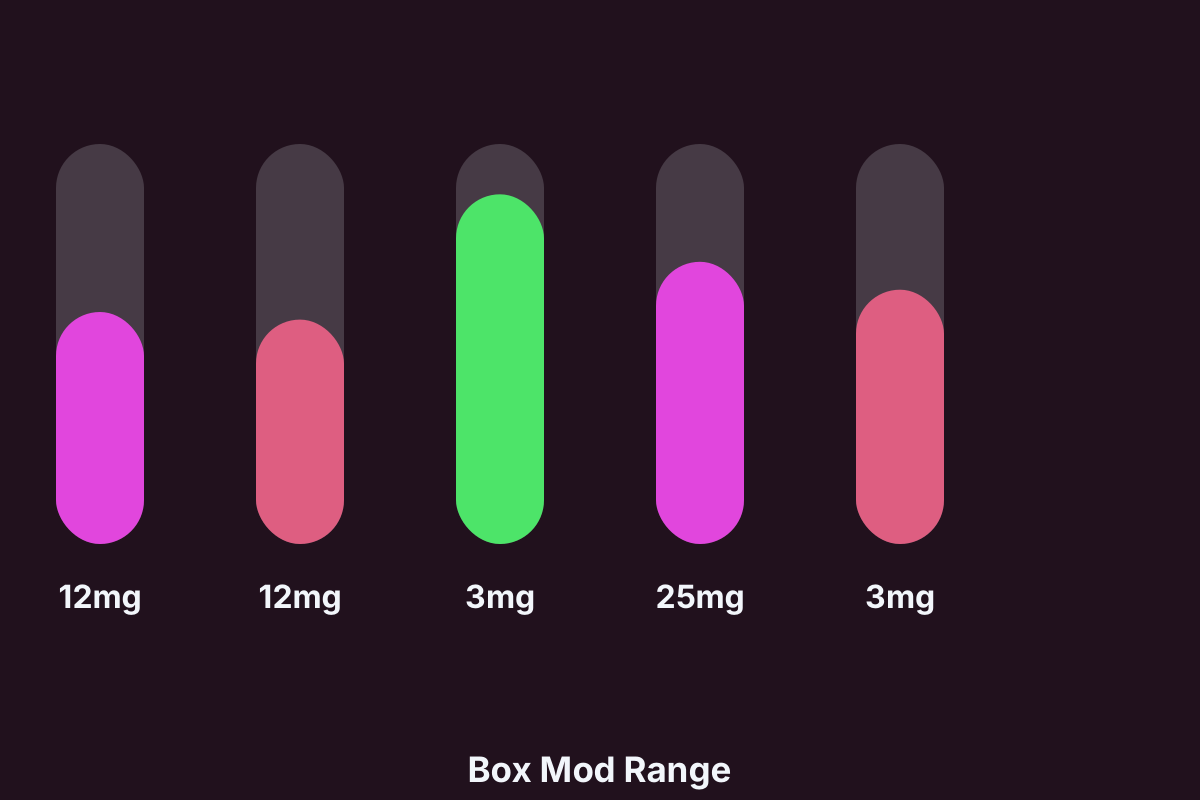
In most cases yes, as long as each strength meets the minimum run length. Mixed strength cartons are popular with retailers building their first display because they show the full ladder without over committing.
Do you provide compliance documents?
Every shipment leaves with the documentation set relevant to your market, including batch records and test reports where required. Your local rules still determine what you must file, so confirm those with your broker before import.
How are price changes handled on repeat orders?
{K} pricing is reviewed against input costs and volume rather than adjusted casually. Any change is confirmed in writing before the next order is scheduled, with the reason stated so you can judge it yourself.
Next Step
Start smaller than feels comfortable, measure honestly, then scale what worked. That sequence has saved more of our customers money than any negotiation tactic we could suggest.
Related Reading
- Box Mod Staff Training Notes for Store Teams — Freight Included
- Box Mod Bundle Pricing That Moves Older Stock — Latin America
- Box Mod Approval Workflow From Sample to Shipment — Plain Language
- Box Mod Freight Options Compared: Air, Sea and Express — Regional Distributors
- Box Mod Protecting Your Private Label Design — a Factory Floor View
- Setting Minimum Order Quantities for Box Mod — Warehouse Teams